

This website uses cookies so that we can provide you with the best user experience possible. Cookie information is stored in your browser and performs functions such as recognising you when you return to our website and helping our team to understand which sections of the website you find most interesting and useful.
Business
Events
Knowledge
1 Jul 26
BIFIS Conference 2026: Skills, standards and the future of fitted interiors
This blog post was written by Unhooked Managing Director, Claire Gamble
Last week, I had the opportunity to attend the BIFIS Conference 2026 at the NEC, held during the first morning of InstallerSHOW. It was a great chance to catch up with contacts from across the sector – including our construction PR client Häfele UK, which is a supporter of BIFIS – as well as an opportunity to hear about the work BIFIS has been doing, the progress it wants to make, and the role the wider industry can play in supporting a stronger future.
BIFIS (the British Institute of Fitted Interiors Specialists) is a not-for-profit trade organisation dedicated to the fitted interiors sector, including kitchens, bedrooms and bathrooms. It acts as an accreditation body, maintains a register of installers, supports industry standards, promotes skills and training, manages compliance, and champions more sustainable ways of working.
Through its work, it brings together a wide network of installers, suppliers, distributors, manufacturers and retailers, all with a shared interest in improving the industry and making sure it can continue to succeed well into the future.
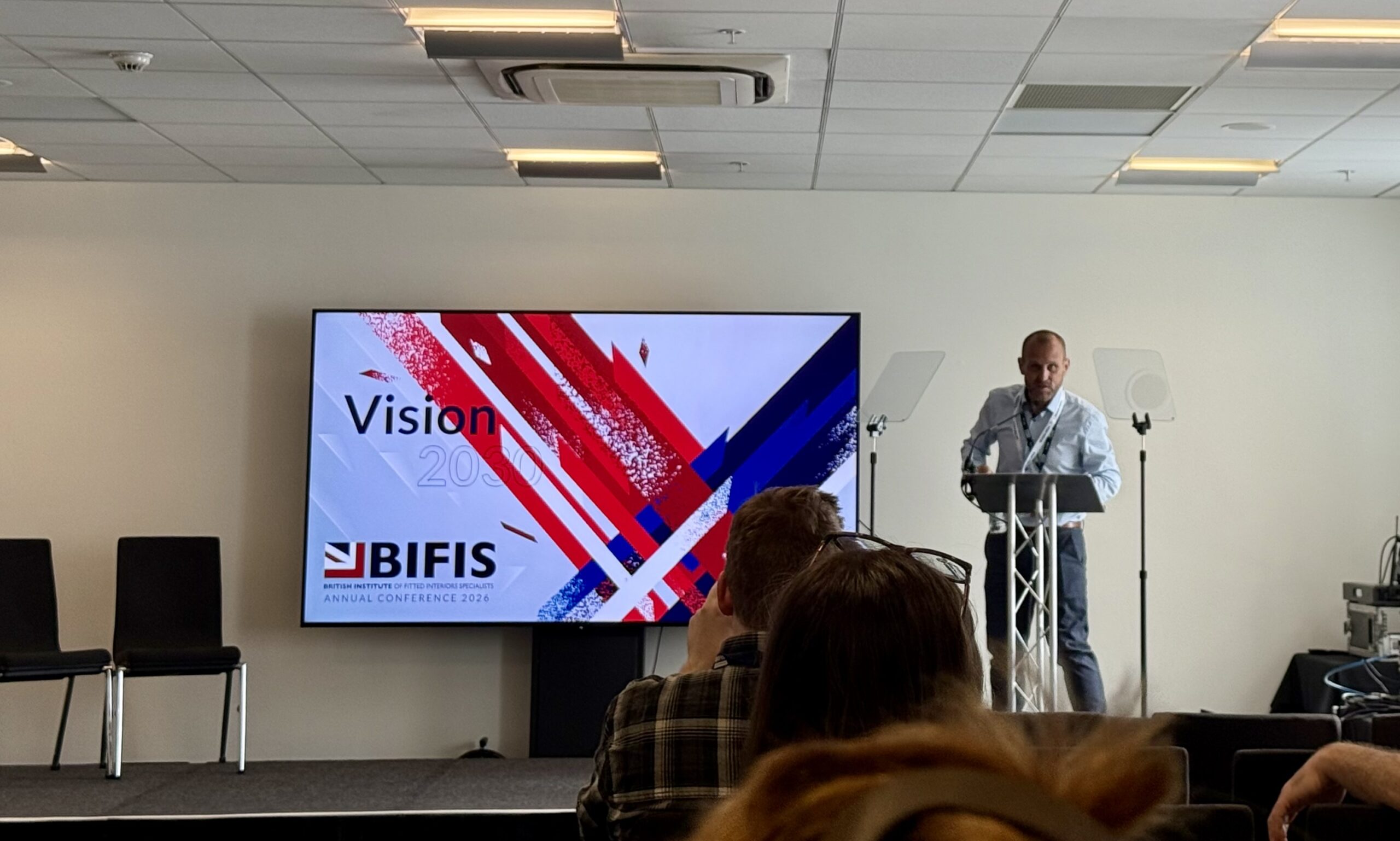
During the conference, BIFIS CEO Damian Walters spoke about the organisation’s Vision 2030 Manifesto, with a particular focus on skills, standards and compliance.
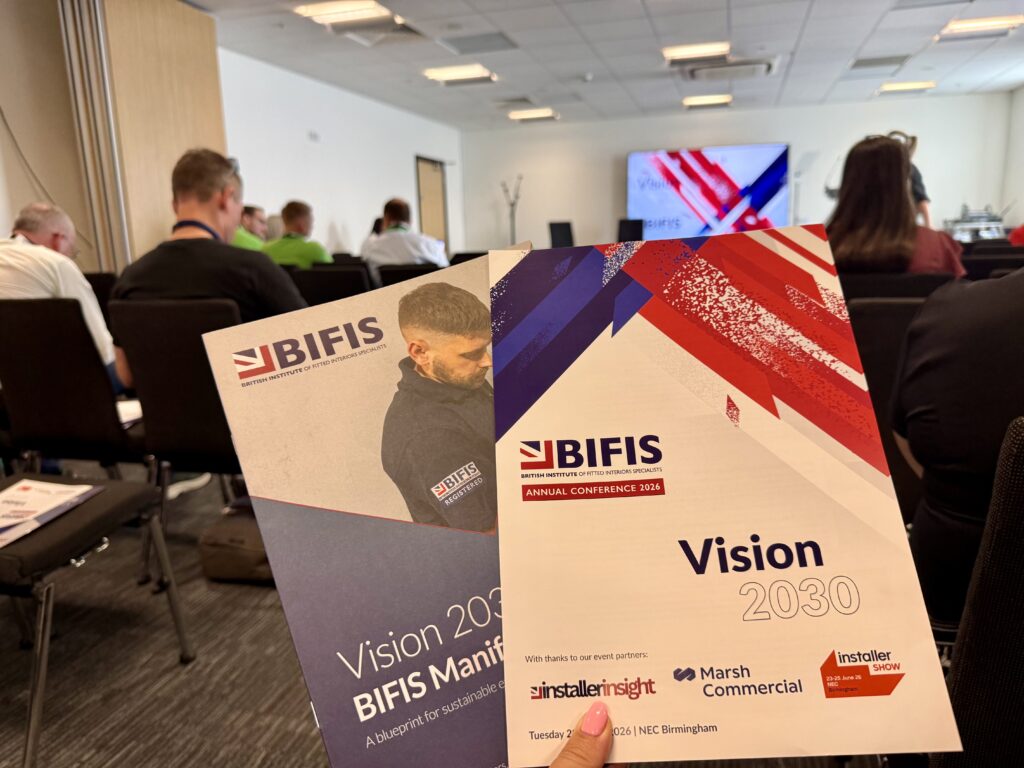
These are not new challenges for construction, but they are becoming increasingly urgent. Anyone who works in or around the industry knows there is a shortage of skilled workers, and that the issue will only become more difficult unless more is done to attract, upskill and retain new talent.
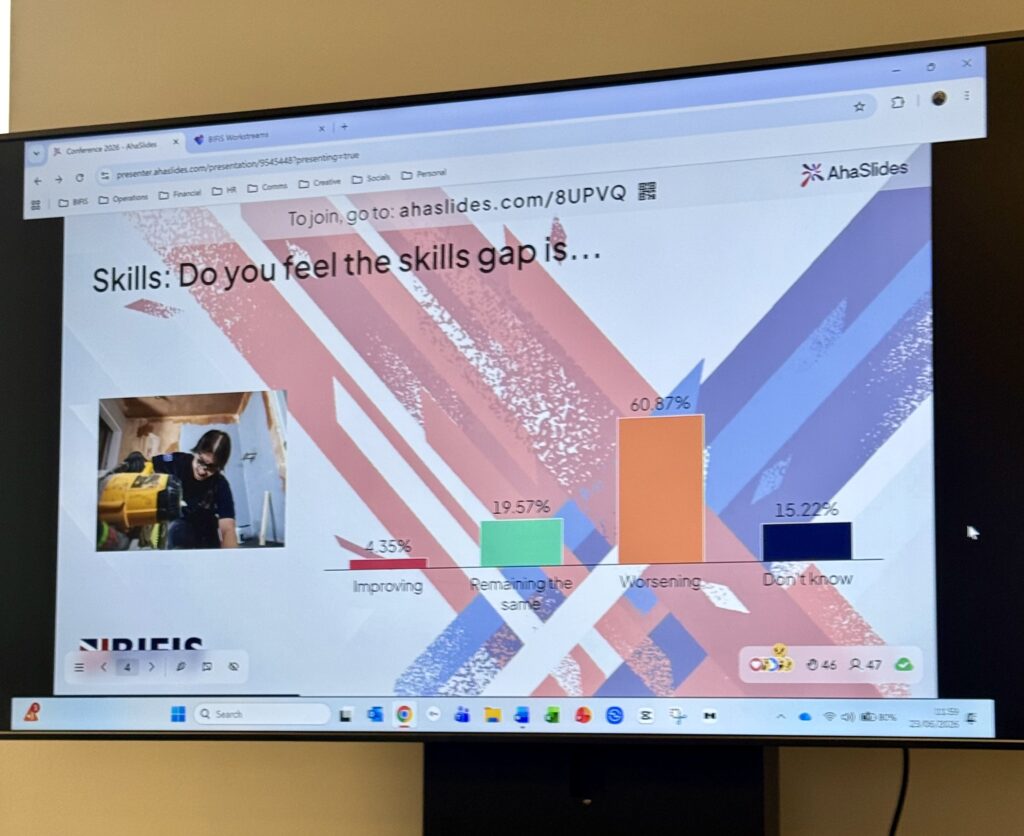
That was reflected at the conference. During one of the live polls, most delegates felt that the skills shortage is getting worse, with discussions focusing on an ageing workforce and not enough new people entering the industry.
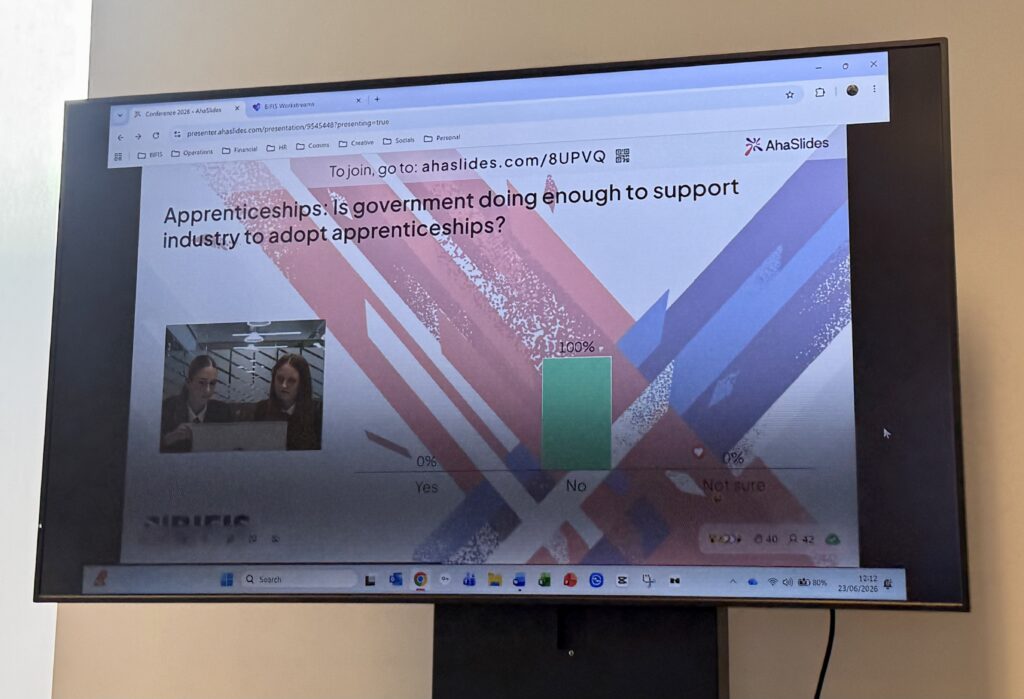
In another live poll, attendees voted unanimously that they did not think the government was doing enough to support industry to adopt apprenticeships. But there was support for apprenticeships, with some businesses sharing positive experiences and others discussing how wider industry partners could help to make apprenticeships more viable, including ideas around sponsorships.
One of the areas I found particularly interesting was BIFIS’ plan to support schools and help students understand the different job and training opportunities available in the sector. The aim is to reach young people earlier, from around Year 6 and throughout their years at secondary school. From working with other organisations with similar goals, I know that by the time teenagers are sitting their GCSEs, it can already be too late to influence their future work aspirations. They may have formed ideas about what certain careers look like, ruled out vocational routes, or simply never been shown the range of opportunities available in sectors like construction and the built environment.
The fitted interiors sector offers a range of varied and skilled careers. It is not just about installation, although that is clearly a vital part of it. It also connects with design, project management, customer service, sales, sustainability, technology, logistics, training, compliance and entrepreneurship.
At a time when young people are hearing more about tech, AI and the changing future of work, along with the rising costs of university degrees and a difficult job market, there is a strong case for showing young people (and their parents and teachers) careers that are practical, skilled, human and in demand. And yes it’s great to hear BIFIS’ plans to reach young people, but the whole industry needs to play a part in this through things like school talks, work experience, site visits, mentoring and more.
Another key topic during the conference was licensing. Damian discussed how the industry may be closer than ever to mandatory licensing for installers, and asked how BIFIS and the wider sector can help shape that conversation.
Licensing has the potential to raise standards, improve consumer confidence and help professional installers stand apart from those who are not operating to the same level. It would be a big change for the industry though and would need to be something that the installers themselves felt was beneficial and realistic, as well as something that had been developed based on real experiences and insights from the industry.
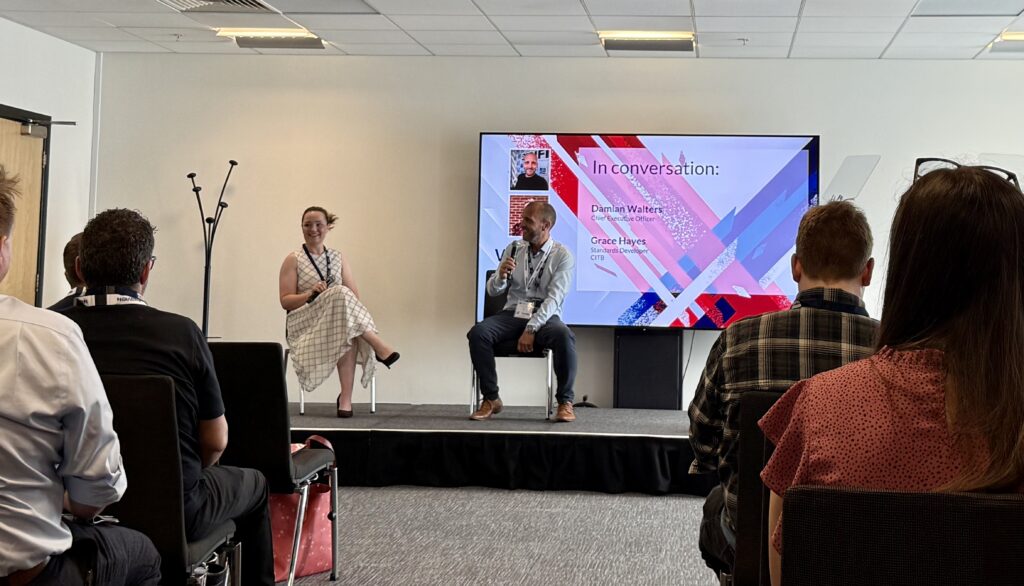
That’s why it was interesting to hear from Grace Hayes from CITB to give an update on the development of standards across the industry, including the work of the Competency Framework Working Group. The conversation between Grace and Damian showed there’s a lot of work going on behind the scenes to help the sector, and they really value and welcome people’s thoughts and experiences to help shape frameworks and future initiatives. Find out more about how the industry can have its say as the Competence Framework Consultation opens.
Overall, the conference highlighted that although there are challenges in the industry, there are a lot of positive actions, collaborations and energy driving it forward. Skills, standards and compliance are all essential in strengthening the sector. BIFIS is helping to make these important conversations happen, supporting this with actions and practical steps. But it needs support from the wider industry, which is why it’s so important for brands – whether that’s retailers, manufacturers or distributors – to support and get involved with it.