This website uses cookies so that we can provide you with the best user experience possible. Cookie information is stored in your browser and performs functions such as recognising you when you return to our website and helping our team to understand which sections of the website you find most interesting and useful.
AI
Business
Knowledge
Media
News
News/PR
PR
4 Dec 25
2026 PR Trends

2026 PR Trends
The media and digital landscape is shifting fast. Audiences are changing how they discover brands, assess credibility, and what they expect from communications. At the same time, business leaders are demanding proof of impact, not just visibility.
Our new 2026 PR Trends Report explores what is reshaping PR in the year ahead, and what they mean for marketing, communications and leadership teams. Here are the headline themes.
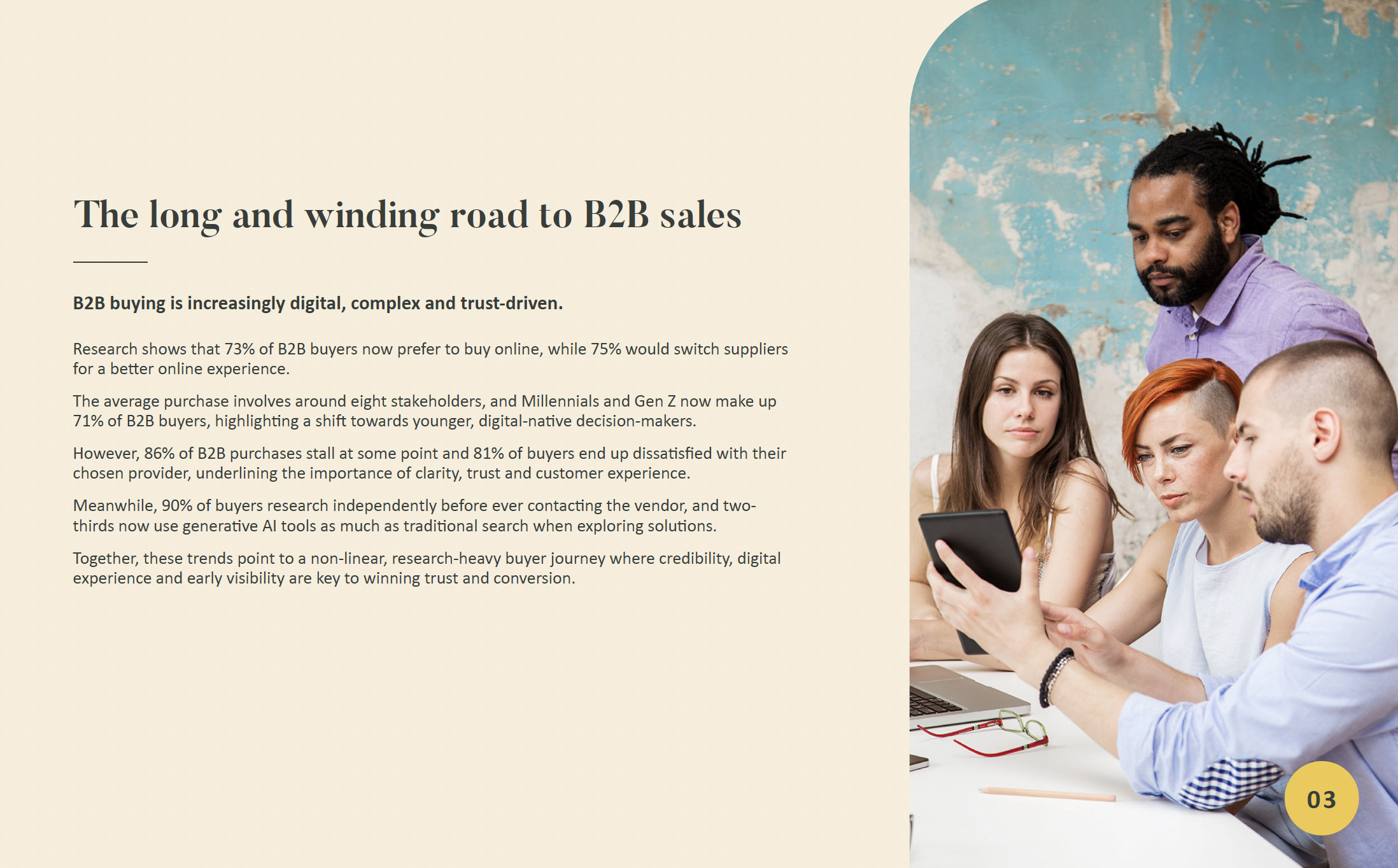
B2B buying is more complex, digital and trust-driven
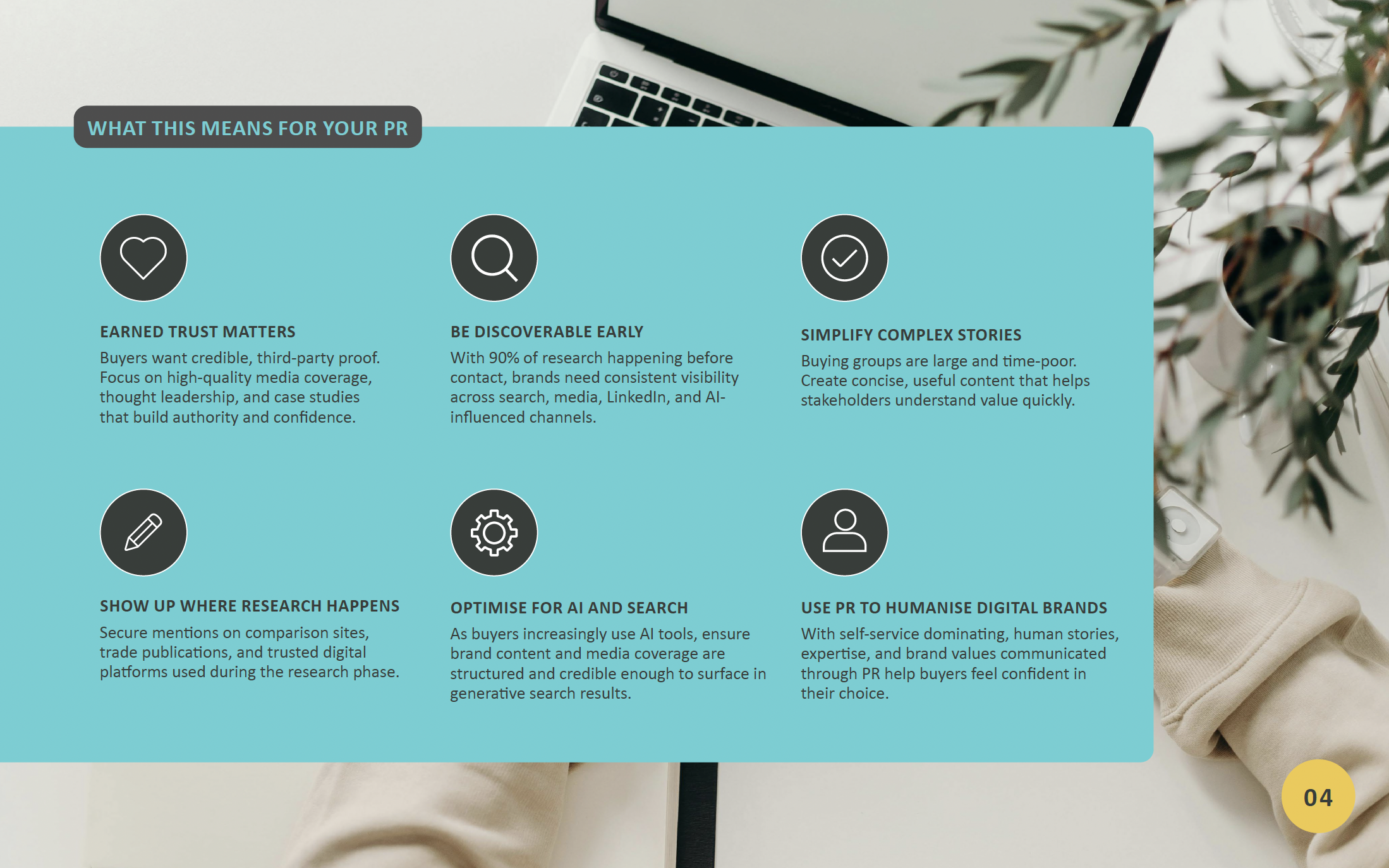
B2B purchasing now involves multiple stakeholders, extensive independent research, and a preference for digital self-service. Around 90 percent of buyers research independently before ever contacting a vendor, pointing to the importance of early visibility, clarity and credibility
With two-thirds using generative AI as much as traditional search, brands need to show up in the right places, with useful, authoritative information that helps buyers feel confident. This means working with a B2B PR agency who can simplify and humanise complex stories, build proof points and ensure content is discoverable.
Social media fatigue is real, and trust is fragile
Time spent online is decreasing amongst some demographics. Trust remains fragile too. Traditional news sources score higher for trust than social media, meaning credible media coverage still matters in influencing perceptions and decisions. Meanwhile, the rise of hyper-realistic AI content, influencer saturation and commercial feeds is pushing audiences towards more authentic, human-centred communication.
The private web is becoming the new home of influence
As the public web becomes noisier, people are moving to private spaces such as messaging apps, closed groups and paid communities. WhatsApp usage dominates, and platforms like Substack have seen significant growth in paid subscriptions. Up to 80 per cent of social sharing is now happening privately, making much of online influence invisible to traditional analytics. For brands, this signals a shift away from chasing reach and towards nurturing smaller, more engaged communities.
AI is redefining online discovery and authority
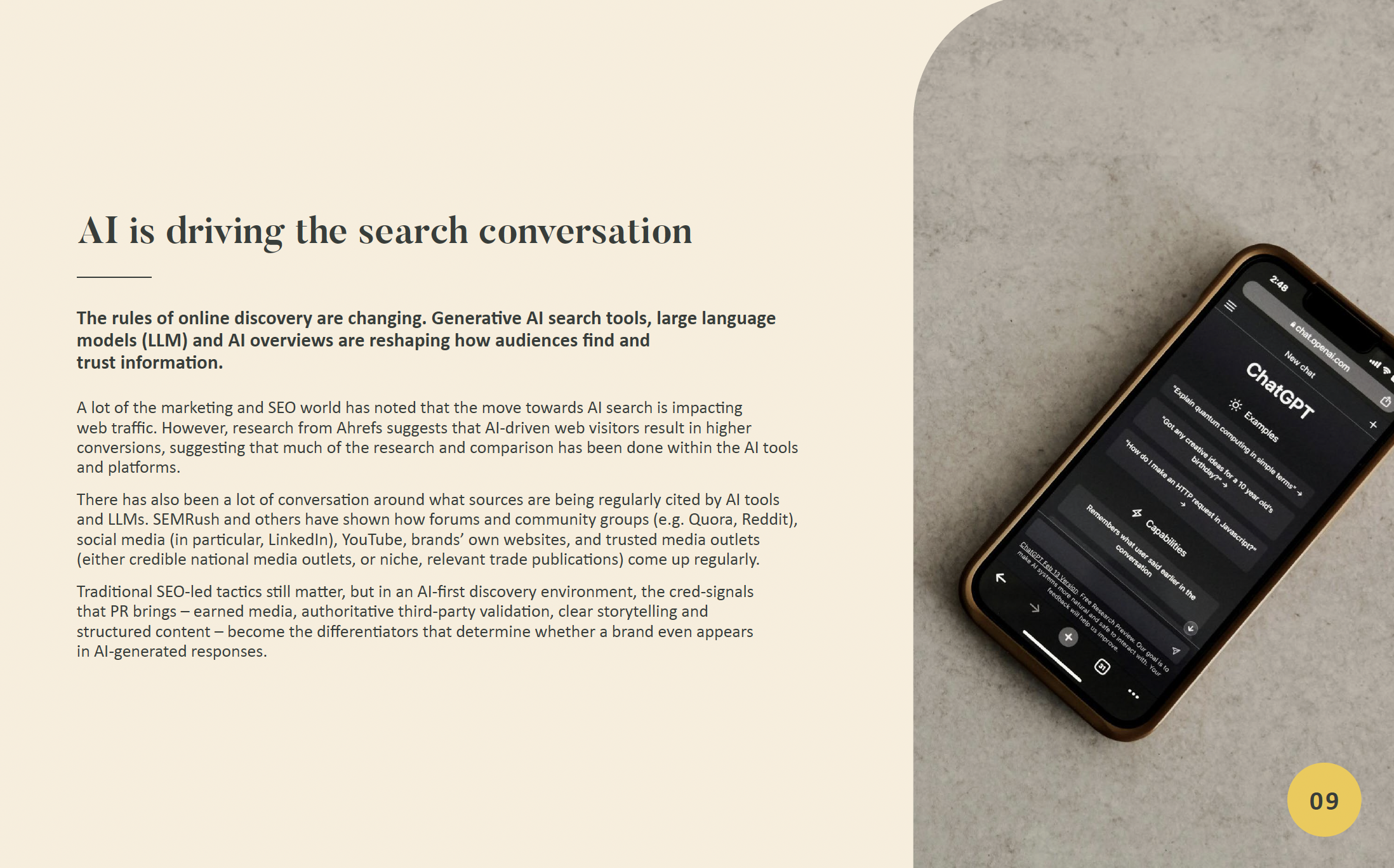
AI-generated search results are reshaping how audiences find and trust brands. Traditional SEO still matters, but authority, expertise and credibility increasingly determine whether a brand appears at all.
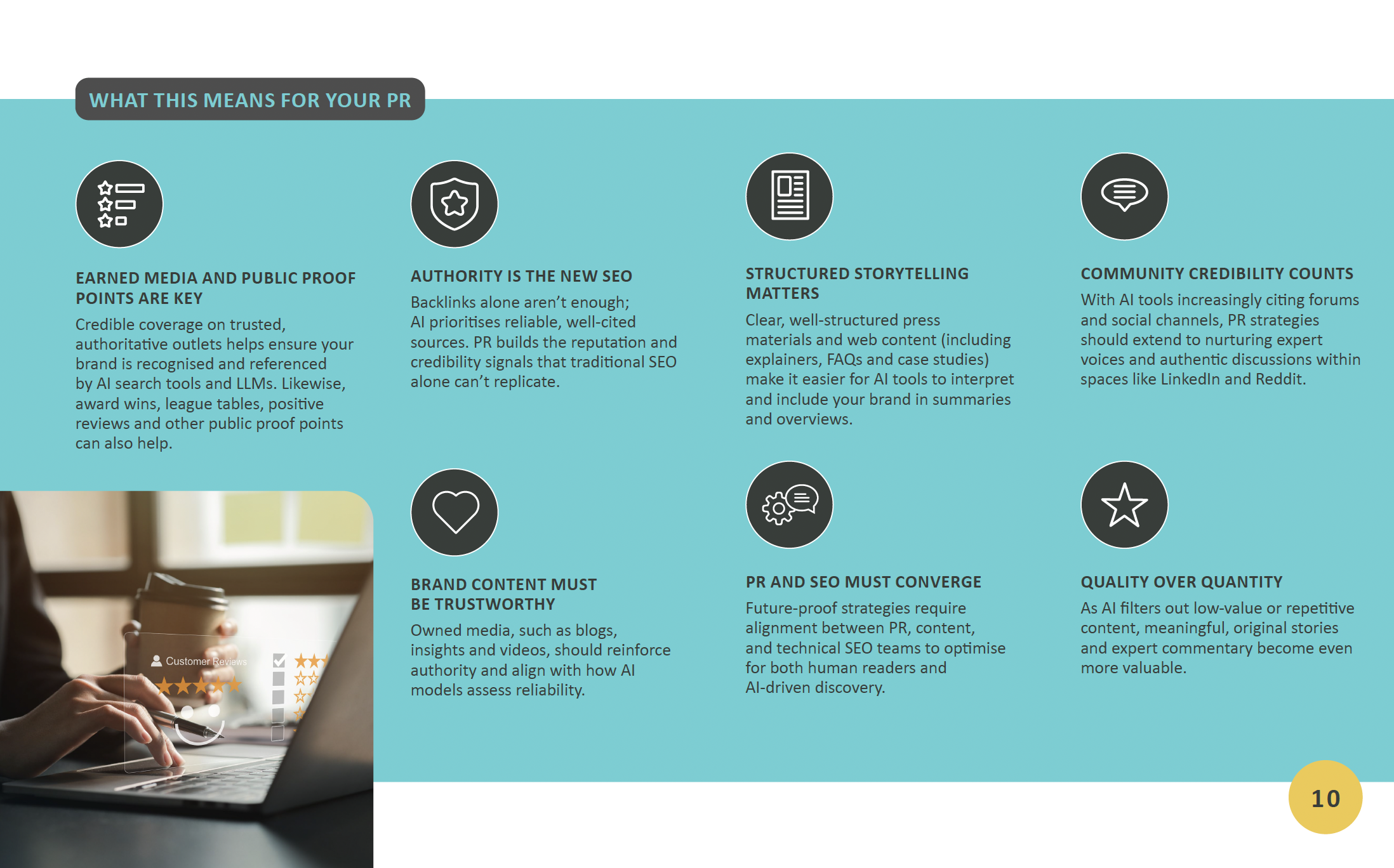
AI tools are citing forums, LinkedIn, YouTube, brand websites and trusted media outlets as preferred sources.
This puts renewed emphasis on earned media relations, authoritative content, and public proof points
In an AI-first environment, authority is becoming the new SEO. Find out why PR is essential in AI search.
Journalists are overwhelmed, and quality matters more than ever
The renewed focus on media relations has created intense noise. Journalists are facing inboxes full of low-quality, AI-generated and even fabricated content, alongside shrinking newsroom resources. This makes high-quality, relevant storytelling and relationship-based media relations a strategic advantage. Brands that invest in editorial skill, credibility and news value will cut through the clutter. Read more about how PR can fight back against fake spokespeople and AI slop.
ESG expectations are rising, and audiences demand proof
Consumers are influenced by tangible ethical actions such as fair pay, reducing emissions and paying fair tax. Accreditations, like B Corp, matter less than demonstrable behaviour. More than half of people say there is too much confusion around environmental claims, and almost 60 percent want businesses to provide more evidence of ethical practice. ESG communication must shift from promotional messaging to transparent reporting and measurable proof.
Measurement is moving from outputs to outcomes
Boards and CMOs increasingly expect PR to show how it supports business outcomes such as recruitment, retention, lead generation and brand value. Measurement frameworks, like the updated Barcelona Principles, emphasise integrating evaluation throughout the process and combining qualitative and quantitative data. In other words, coverage volume is not enough. PR must demonstrate contribution to business performance. Find out how we are building our own digital tool to better measure the impact of PR.
Why trust is leading the way in 2026
Across every trend, trust is the theme that dominates. Whether navigating AI search, social media fatigue, sustainability pressures or media saturation, audiences and stakeholders are demanding greater credibility, transparency and value from the brands they engage with.
In 2026, effective PR is not just about getting seen. It is about showing evidence, building confidence and proving impact.
Brands that invest in credibility, connection and contribution will stand out.
2026 PR Trends for Marketing Teams
If you work in marketing and want to find out more about these PR trends and what they mean for your business, find out more in our report.
2026 PR Trends: Take a look inside the report